
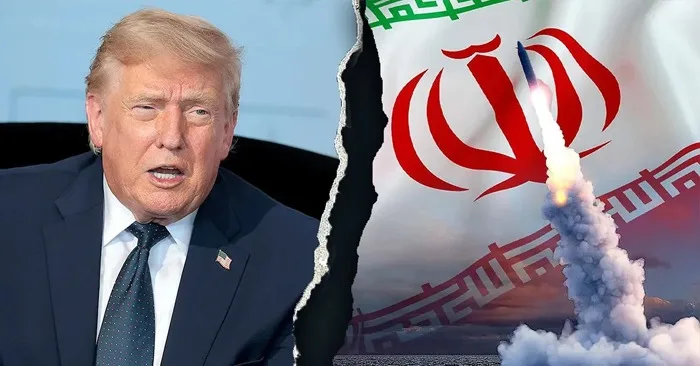
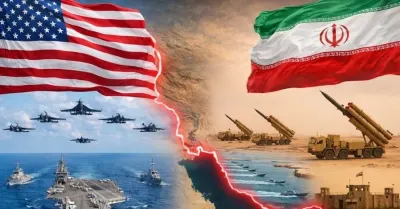
US President Donald Trump has suggested that the United States could take on the role of an ‘occupying force’ in Iran. He also claimed that the strategically important Strait of Hormuz is under American control, adding that the US is extracting more oil from the area than at any time in history.
Trump made the remarks while speaking to reporters on Friday (November 6), following an address at a NASA facility in Florida.
During the conversation, Trump compared the conflict involving Iran with the ongoing Russia-Ukraine war. He claimed that 25,000 people were killed in the Russia-Ukraine conflict during October alone.
Referring to the fighting between Moscow and Kyiv, Trump said, “That is what you call a war.”
In contrast, he claimed that despite the conflict between the United States and Iran entering its ninth month, no one had been injured in recent months. Based on this argument, he suggested that the situation should not be described as a war.
“We may just be an occupying force. We could be an occupying force,” Trump said.
Trump also reiterated his claim that the United States has control over the Strait of Hormuz, one of the world's most important maritime routes for global energy supplies.
“The Strait of Hormuz is under our control. We are extracting more oil from that strait than at any time in history,” he claimed.
The US president was also questioned about reports that American forces had carried out an attack near Iran's Qeshm Island on Friday. Although he initially declined to comment, he later acknowledged that limited military strikes had taken place.
“I don't want to talk about that. We carry out some small-scale strikes,” Trump said.
He further claimed that Iran had established an air defence facility, which US forces destroyed within minutes.
A few days earlier, Trump had also acknowledged a US strike on an Iranian air defence installation on Qeshm Island. However, he described the operation as a limited military action rather than a return to full-scale war.
Meanwhile, Iran has rejected Washington's claim that the United States controls the Strait of Hormuz. Tehran maintains that the strategic waterway remains under its control and has warned that the passage will not be reopened until its conditions are met.
The Strait of Hormuz is a crucial shipping route through which a significant portion of the world's oil and gas supplies passes. Any disruption to maritime traffic in the area could have serious consequences for global energy markets.
The United States and Israel launched military operations against Iran on February 28. A ceasefire was subsequently reached between the parties in April. In June, a memorandum of understanding was also signed with the aim of reaching a comprehensive peace agreement.
However, despite several rounds of negotiations, the parties have yet to reach a final settlement to end the conflict.



Comments
No comments yet. Be the first to write one.
Leave a comment