


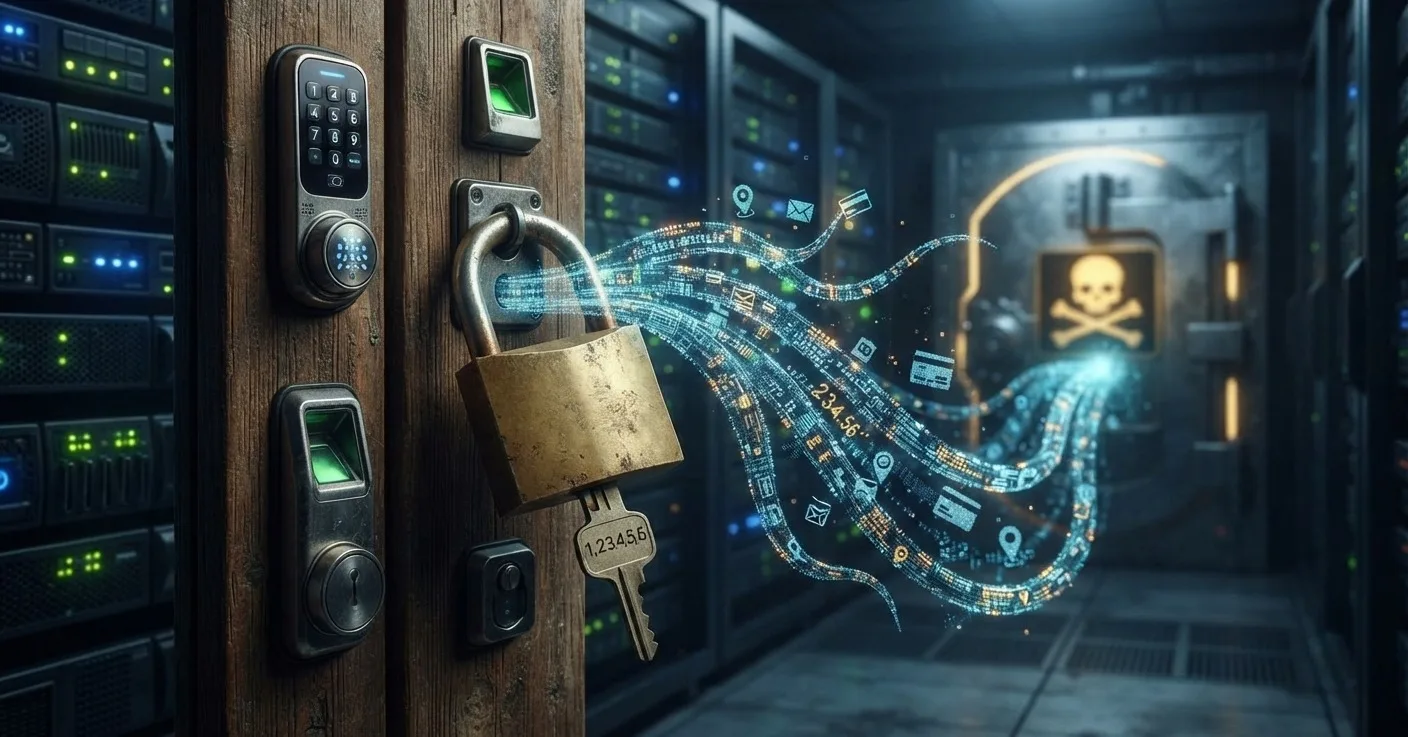
Despite the growing number of cyberattacks and data breaches worldwide, many people continue to use weak and predictable passwords to protect their online accounts. Passwords such as '123456', 'admin', 'password' and 'qwerty' remain popular because they are easy to remember. However, their widespread use puts personal information, bank accounts and social media profiles at risk.
The findings come from a recent study by Lithuania-based cybersecurity company Nord Security. Its password management service NordPass conducted the research in collaboration with NordStellar, a cyber threat intelligence company.
What Is the World's Most Used Password?
The study analysed data exposed in security breaches and circulated on the dark web between September 2025 and September 2026. It identified the 200 most commonly used passwords across 44 countries.
According to the findings, '123456' has remained the world's most commonly used password for the second consecutive year. It appeared more than 7.2 million times over the past year.
The password 'admin' ranked second, with more than 4.4 million uses.
'12345678' and '123456789' occupied the third and fourth positions, respectively. The findings show that simple numerical sequences continue to dominate password choices despite growing cybersecurity threats.
Similar Password Habits in the US and India
The United States also recorded '123456' as its most commonly used password, followed by 'admin'.
Other passwords appearing in the country's top 10 included 'password', '12345678', '123456789', '1234', 'user@123', '12345' and 'password1'.
A similar pattern was found in India. There, '123456' ranked first, followed by '12345678' and 'admin'.
Other frequently used passwords in India's top 10 included '1234', '12345', '123456789', 'password', 'Admin@123', 'Welcome@123' and 'admin@123'.
Bangladesh was not included in the latest NordPass and NordStellar study. As a result, the research does not provide a reliable ranking of the country's most commonly used passwords. However, the global and regional findings highlight the risks associated with choosing simple and predictable passwords.
Why Do People Still Choose Weak Passwords?
The study suggests that many users continue choosing weak passwords because they are easier to remember, even when they understand the associated security risks.
Personal interests and familiar references also influence password choices. These may include historical events, the COVID-19 pandemic, favourite sports teams and television programmes.
Researchers observed that password selection habits have changed very little over the past eight years.
Karolis Arbaciauskas, head of product and business development at Nord Security, said passwords are rarely completely random. People tend to rely on familiar things when creating combinations they can easily remember.
Weak Passwords Face Greater Risks in the AI Era
Cybersecurity experts are increasingly concerned that artificial intelligence could make it easier for hackers to identify weak and predictable passwords.
AI-powered tools can help attackers automate password-guessing attempts and identify common patterns more efficiently. This means using a password alone may not provide sufficient protection for online accounts.
Reusing the same password across multiple platforms creates another serious risk. If a password is exposed through a breach on one website, attackers may try using it to access the user's other accounts.
How to Create Stronger Passwords
Users can improve their online security by following a few basic practices when creating and managing passwords:
Use long passwords containing a combination of uppercase and lowercase letters, numbers and special characters.
Avoid using personal information such as names, birth dates and mobile numbers.
Never reuse the same password across multiple accounts.
Consider using a trusted password manager to create and store strong passwords.
Enable two-factor authentication (2FA) wherever possible.
Change passwords immediately if an account may have been compromised.
Strong, unique passwords and additional security measures are essential for protecting personal information and important online accounts. A small mistake in password selection can expose sensitive data and allow unauthorised access to accounts.




Comments
No comments yet. Be the first to write one.
Leave a comment