


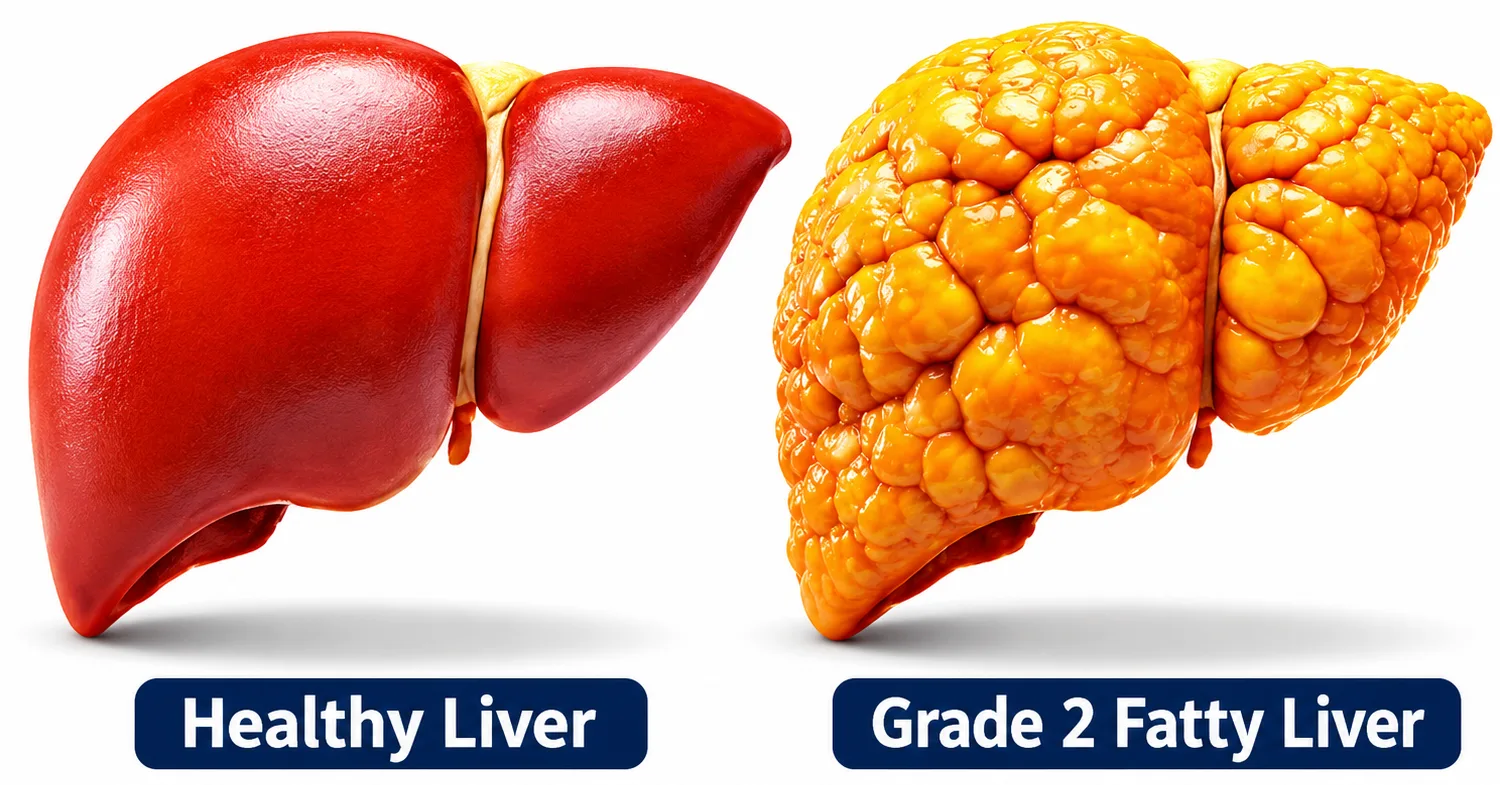
Grade 2 Fatty Liver means a moderate amount of fat has accumulated in the liver. It is usually described as moderate hepatic steatosis on an ultrasound scan. The liver is an important organ that helps process nutrients, store energy and remove harmful substances from the body. When excess fat builds up in liver cells, the condition is called fatty liver disease. When it is associated with metabolic problems rather than alcohol, it is now commonly known as Metabolic Dysfunction-Associated Steatotic Liver Disease (MASLD), previously called NAFLD. Ultrasound reports commonly describe fatty liver as Grade 1 (mild), Grade 2 (moderate) or Grade 3 (severe). These grades reflect how the liver appears on the scan; they do not provide an exact measurement of the percentage of affected cells. Grade 2 does not automatically mean that inflammation, scarring or cirrhosis has developed. However, further medical assessment may be needed to understand the liver's condition.
Many people with Grade 2 Fatty Liver have no noticeable symptoms, especially during the early stages. The condition is often discovered during a routine blood test or an ultrasound performed for another reason. Some people may experience unusual tiredness, weakness, discomfort or mild pain in the upper-right side of the abdomen below the ribs, loss of appetite, nausea or a general feeling of illness. Unexplained weight loss may also need medical attention. If liver damage progresses, warning signs can include yellowing of the skin or eyes (jaundice), swelling of the abdomen or legs, dark urine, repeated vomiting, easy bruising or bleeding and confusion. These symptoms should never be ignored. Obesity, excess abdominal fat, type 2 diabetes, insulin resistance, high triglycerides, abnormal cholesterol levels and high blood pressure can increase the risk. A diet high in sugary drinks, processed foods and calories, low physical activity, excessive alcohol consumption, certain medicines and some medical conditions may also contribute to liver problems.
Doctors assess Grade 2 Fatty Liver by reviewing a person's medical history, weight, waist measurement, blood pressure, eating habits, alcohol intake and existing health conditions. They may recommend several tests depending on the patient's condition. A Liver Function Test (LFT), including ALT and AST, can help assess liver enzyme levels, although normal results do not always rule out fatty liver or liver damage. An abdominal ultrasound can identify fat accumulation, while FibroScan or other elastography tests can help assess liver stiffness and the risk of fibrosis. CT scans or MRI may be recommended when further assessment is needed. A liver biopsy is not required for everyone, but a specialist may consider it if inflammation, advanced fibrosis or another liver disease is suspected. Importantly, an ultrasound can show fat but cannot reliably determine whether inflammation or fibrosis is present. Therefore, the scan grade alone cannot establish the full stage of liver disease.
There is no single treatment suitable for every person with Grade 2 Fatty Liver. Treatment depends on the underlying cause, liver condition and associated health problems. Doctors generally focus on gradual weight management, balanced nutrition, regular physical activity and control of diabetes, blood pressure and cholesterol. For people who are overweight, losing around 3–5% of body weight may reduce liver fat, while a loss of approximately 7–10% may help improve liver inflammation and, in some cases, fibrosis. However, rapid weight loss and malnutrition can make liver disease worse. A balanced diet may include vegetables, seasonal fruits, lentils, beans, oats, whole grains, brown rice, whole-wheat bread, fish, eggs, skinless chicken, low-fat yoghurt and moderate portions of nuts. Sugary soft drinks, packaged juices, sweets, cakes, pastries, fried foods, fast food, processed meat, excessive red meat, refined carbohydrates and alcohol should be limited or avoided. No single food can cure fatty liver; the overall eating pattern matters.
Regular exercise is another important part of managing Grade 2 Fatty Liver. Adults are generally advised to aim for at least 150 minutes of moderate-intensity physical activity each week, along with muscle-strengthening activities on at least two days, if their health allows. Brisk walking, cycling and swimming are possible activities, but the suitable type and intensity depend on a person's physical condition. Maintaining a healthy weight, controlling blood glucose and cholesterol, eating appropriate portions and avoiding alcohol can help protect liver health. People should not start herbal remedies, supplements, vitamins, weight-loss products or medicines without consulting a qualified healthcare professional, because some products may harm the liver. Anyone with an ultrasound report showing fatty liver, raised liver enzymes, persistent upper-right abdominal discomfort, diabetes, obesity or high cholesterol should seek medical advice. Jaundice, abdominal or leg swelling, repeated vomiting, unusual bleeding, easy bruising, dark urine or confusion require prompt medical assessment.
Grade 2 Fatty Liver should not cause unnecessary panic, but it should never be neglected. In many people, liver fat can improve with appropriate lifestyle changes and proper management of related conditions. Whether the condition can be completely reversed depends on its cause, severity and whether inflammation or fibrosis has developed. People should follow up with their doctor and complete any recommended tests rather than relying only on an ultrasound grade. A doctor or registered dietitian can help develop a safe, individualised diet and activity plan. There is no universal fatty liver diet chart or exercise routine that is right for everyone. Do not stop prescribed medicines, start new treatment, follow a restrictive diet or take supplements based on online advice. Always consult a qualified doctor before making any change to your treatment, diet, medication or exercise routine. Early assessment, regular follow-up and medically guided lifestyle changes are important steps towards protecting long-term liver health.

Comments
No comments yet. Be the first to write one.
Leave a comment