

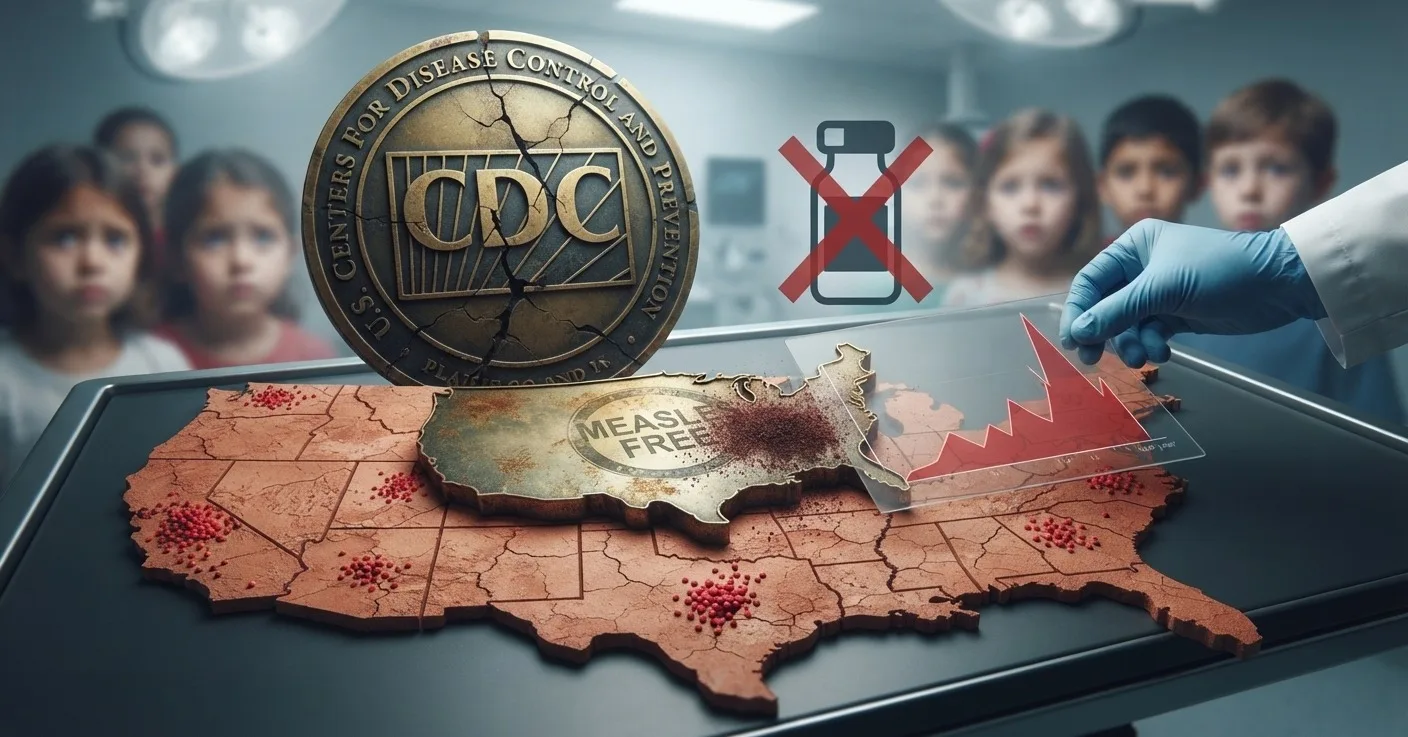
The United States has lost its measles-free status after maintaining the recognition for more than two decades. The decision follows more than 12 months of continuous transmission of the same measles virus strain in the country.
Mexico and Bolivia have also lost their measles elimination status, raising concerns about the resurgence of the highly contagious disease across the Americas.
The announcement was made on Tuesday, November 17, by Dr Jarbas Barbosa, director of the Pan American Health Organization (PAHO), the regional office of the World Health Organization (WHO). The development was reported by the BBC.
Declining Vaccination Rates Fuel Measles Resurgence
Dr Barbosa described the renewed spread of measles as a serious warning for the entire region. He said the consequences of long-standing gaps in vaccination coverage were now becoming increasingly visible.
Insufficient immunisation is considered one of the major factors behind the global rise in measles infections.
Daniel Salas, executive manager of PAHO's Immunization Department, said countries that have lost their measles elimination status would need to submit action plans outlining how they intend to increase vaccination coverage.
More Than 5,400 Measles Cases Reported in the US This Year
According to the US Centers for Disease Control and Prevention (CDC), more than 5,400 people have contracted measles in the country this year. The disease has also claimed 10 lives.
These figures represent the highest levels of measles infections and deaths in the United States since the 1990s.
Pennsylvania has been particularly affected, with more than 1,400 reported cases and seven deaths.
Following the loss of its measles-free status, the CDC said it remained committed to restoring the country's elimination status by improving access to vaccination.
CDC Director Erica Schwartz said vaccination, rather than the recognition of measles elimination, is what protects people from the disease. She added that the agency had invested $100 million in state and local health departments to identify where infections are spreading and reach affected communities.
Kennedy Recommends MMR Vaccination
US Health Secretary Robert F. Kennedy Jr., who has previously expressed doubts about vaccine safety and effectiveness, has now encouraged people to receive the MMR vaccine to prevent measles.
In a social media post, he said the government was working to address gaps in vaccination coverage and rebuild public confidence in immunisation.
The MMR vaccine protects against measles, mumps and rubella. Health experts generally recommend two doses for children, with the first dose given at 12 to 15 months and the second at 4 to 6 years of age under the US vaccination schedule.
Two doses of the vaccine are approximately 97 per cent effective at preventing measles.
Vaccination Coverage Falls to 92.4 Per Cent
Health experts say maintaining high vaccination coverage is essential to achieving herd immunity, which helps prevent measles from spreading through communities.
For measles, vaccination coverage of around 95 per cent is generally needed to prevent sustained transmission.
However, vaccination coverage in the United States has fallen to 92.4 per cent, increasing the risk of outbreaks.
Nuwan Gunawardene, an assistant professor of medicine at Columbia University Irving Medical Center, described the loss of measles elimination status as a major setback for the country.
Experts believe that misinformation about vaccines following the COVID-19 pandemic, along with political debates surrounding immunisation, has weakened public confidence. This decline in trust has also affected vaccination rates.
Several European Countries Also Lose Measles-Free Status
The United States was the first country in the Americas to achieve measles elimination through extensive vaccination programmes. However, the recent resurgence has put that achievement at risk.
Several European countries, including the United Kingdom, Spain, Austria and Russia, have also reportedly lost their measles-free status this year.
Health experts warn that consistent vaccination programmes and public confidence in vaccines are essential to controlling the disease.
Without improvements in vaccination coverage, measles could continue spreading across countries, putting children and unvaccinated communities at greater risk.


Comments
No comments yet. Be the first to write one.
Leave a comment