
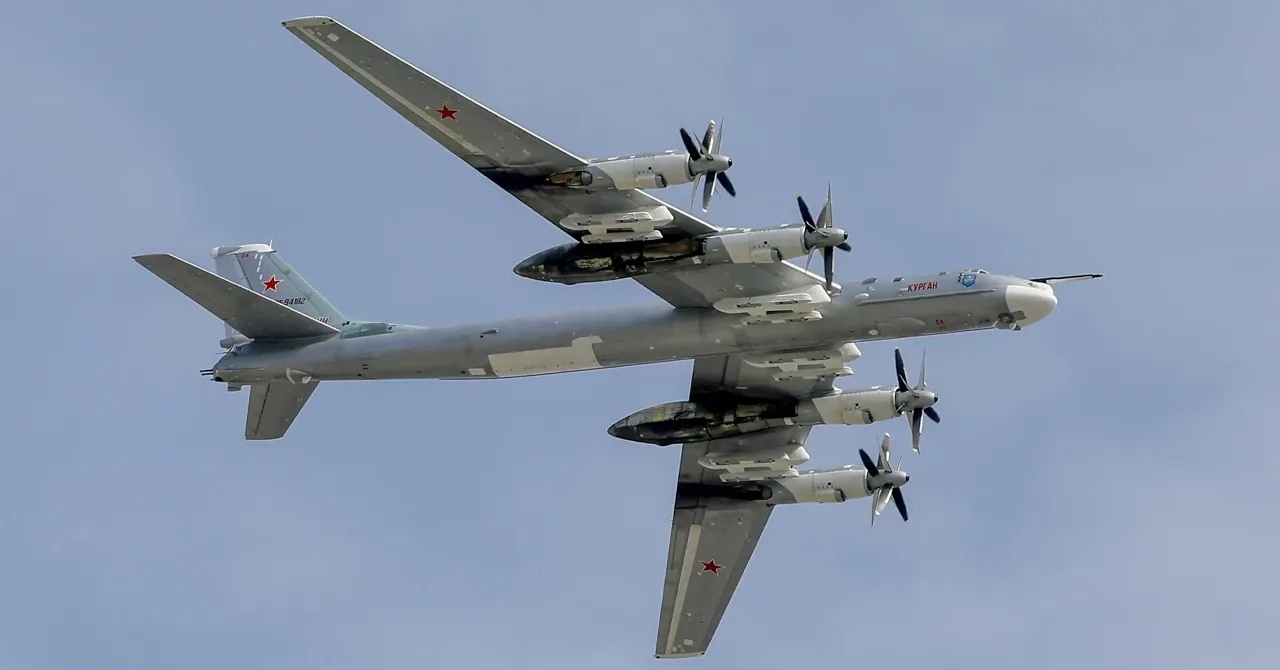
Russia has deployed strategic military aircraft to East Asia ahead of a high-profile meeting involving the presidents of the United States, China and Russia. Two Tu-95 strategic bombers and two long-range refuelling aircraft were spotted at Da Nang Airport in Vietnam. Analysts say the deployment demonstrates Moscow’s ability to project military power across distant regions despite its ongoing war in Ukraine. The move is also being viewed as a strategic message to Washington and Beijing ahead of the leaders’ meeting.
The two Russian Tu-95 bombers were stationed at Da Nang Airport on Wednesday, accompanied by two long-range tanker aircraft capable of refuelling other planes in the air. The Tu-95, known as the ‘Bear’ by NATO, is a strategic bomber with long-range operational capabilities.
On Tuesday, the movement of Russian military aircraft from the country's Far East towards the south prompted heightened attention from the air forces of Japan and Taiwan. The aircraft flew through the region shortly before Russian President Vladimir Putin arrived in Shenzhen, China, to attend the 33rd Asia-Pacific Economic Cooperation (APEC) summit.
At the same time, US President Donald Trump and other world leaders were in Manila, the capital of the Philippines, to attend the ASEAN meeting.
Ian Storey, a security researcher at Singapore’s ISEAS-Yusof Ishak Institute, said the deployment was clearly intended to remind Southeast Asian countries that Russia remains capable of demonstrating its military strength in the region, even while fighting a prolonged war in Ukraine.
Reviving Old Military Access
According to Storey, the last known deployment of Russian strategic aircraft in Vietnam took place in 2014. At that time, Hanoi gave Russian warships and aircraft priority access to facilities at Cam Ranh Bay and Da Nang Airport.
Cam Ranh served as a Soviet military base during the Cold War. During the Vietnam War, US forces had also established military facilities at Cam Ranh and Da Nang.
In 2014, Russia deployed refuelling aircraft to Da Nang to support Tu-95 bomber flights near Guam, a strategically important US military and naval base in the Pacific Ocean.
Storey said he was unaware of any similar deployment since then. He suggested that the operations may have been suspended following objections from the administration of then-US President Barack Obama.
Some variants of the Tu-95 are capable of carrying nuclear weapons. The aircraft can also be used for intelligence gathering and surveillance missions.
Nguyen The Phuong, a Vietnam security expert at the University of New South Wales in Australia, said Moscow requested the restoration of the previous arrangement last year. However, Hanoi was initially hesitant.
According to Phuong, the immediate purpose of the latest deployment appears to be refuelling. However, it could indicate a shift in Vietnam's position and potentially open the door to further Russian aircraft deployments in the future.
A Show of Strength Ahead of the Summit
Chieh Chung, a researcher at Taiwan's Institute for National Defense and Security Research, said Russian military aircraft have previously been spotted near Taiwan, including in 1986 and 2010. Both incidents involved Tu-95 bombers.
He believes Moscow deliberately chose the timing of the latest flight ahead of Thursday's summit involving the United States, China and Russia. The deployment may also be intended to highlight the close military and political cooperation between Moscow and Beijing.
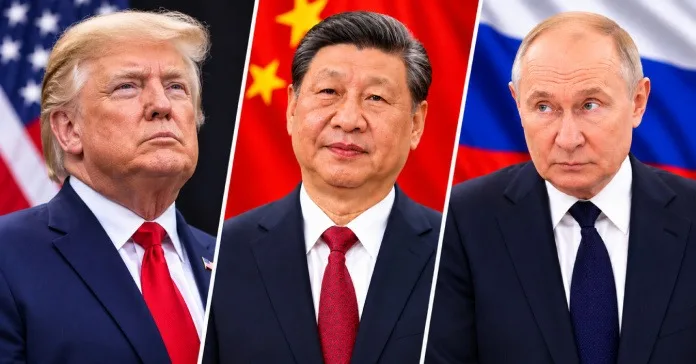
China and Russia maintain close political and military relations. Moscow has repeatedly supported Beijing's territorial claims over Taiwan, while Chinese military aircraft and naval vessels regularly operate around the island.
On Wednesday, Huang Chih-wei, deputy chief of the general staff of Taiwan's military, told reporters in Taipei that the Russian aircraft's flight posed a threat to peace and stability in the Asia-Pacific region.
Is Vietnam Also Sending a Message to China?
Phuong said Vietnam may have allowed the Russian aircraft deployment partly in the hope of securing favourable terms for future military equipment purchases.
Russia remains Vietnam's largest arms supplier, significantly ahead of other countries. Although Hanoi has sought to diversify its sources of military equipment since Russia launched its full-scale invasion of Ukraine in 2022, it still depends on Russian spare parts and technical support.
Phuong believes Vietnam's decision to allow Russian military aircraft could also send a message to neighbouring China.
Vietnam and China have longstanding disagreements over disputed areas in the South China Sea. Hanoi has often viewed its close relationship with Moscow as a strategic advantage in balancing Beijing's growing influence in the region.
According to security researcher Ian Storey, by allowing Russian bombers to operate from its territory, Vietnam may be signalling to China that its military relationship with Russia remains strong.



Comments
No comments yet. Be the first to write one.
Leave a comment