

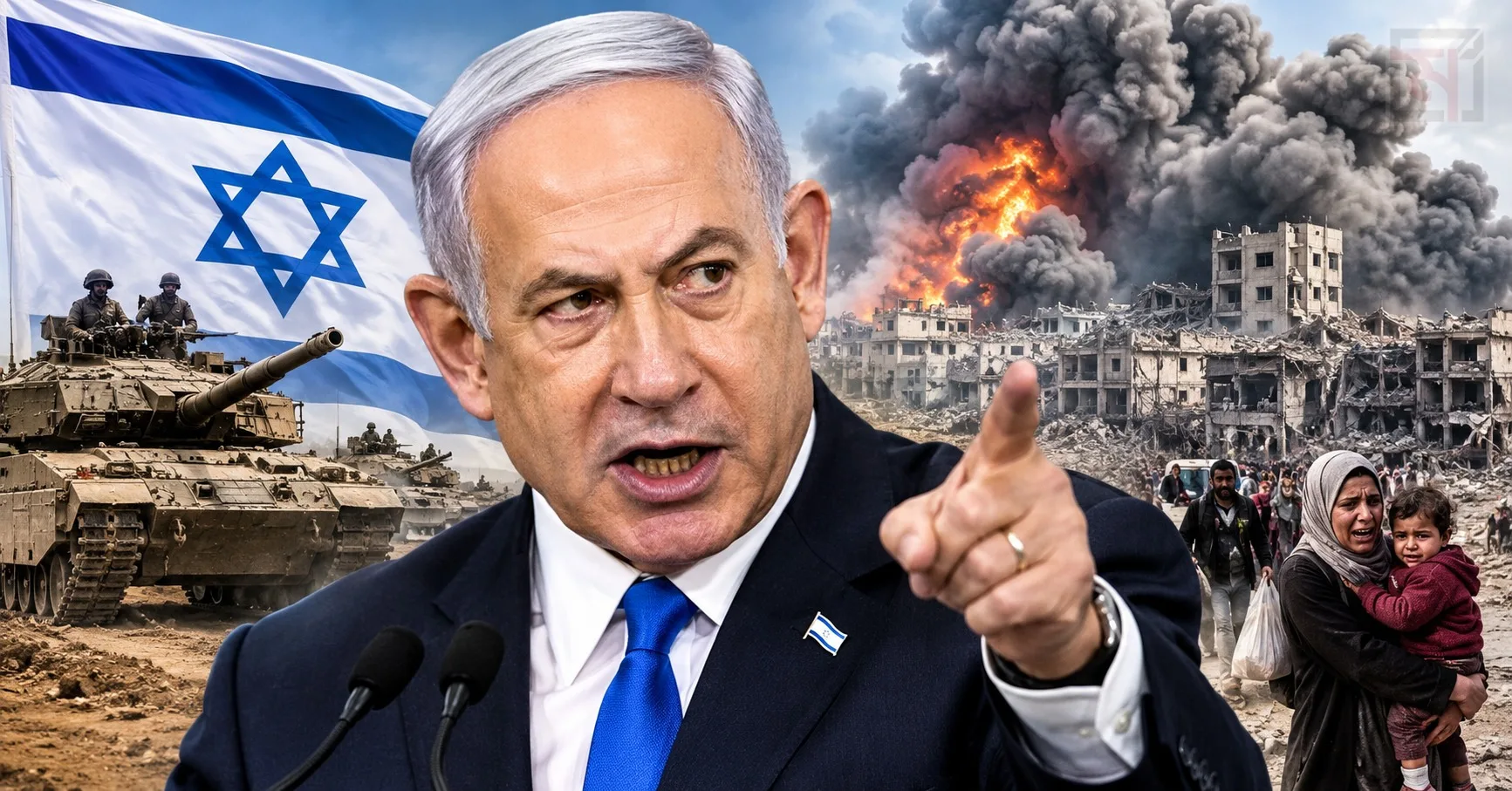
Israeli Prime Minister Benjamin Netanyahu faces serious allegations of corruption, bribery, interference in the judiciary and genocide in Gaza. An arrest warrant issued by the International Criminal Court (ICC) also hangs over him. He is facing multiple criminal trials in Israel. Despite mounting allegations and political controversies, Netanyahu has remained one of the country’s most powerful political figures, serving as prime minister for nearly 19 years across three separate terms.
However, opposition parties in Israel have now joined forces in an attempt to remove Netanyahu from power. President Isaac Herzog has reportedly invited opposition alliance leader Gadi Eisenkot to form a government. If the opposition succeeds, Netanyahu could be forced to step down, potentially exposing him to further legal consequences.
Three Major Corruption Cases Against Netanyahu
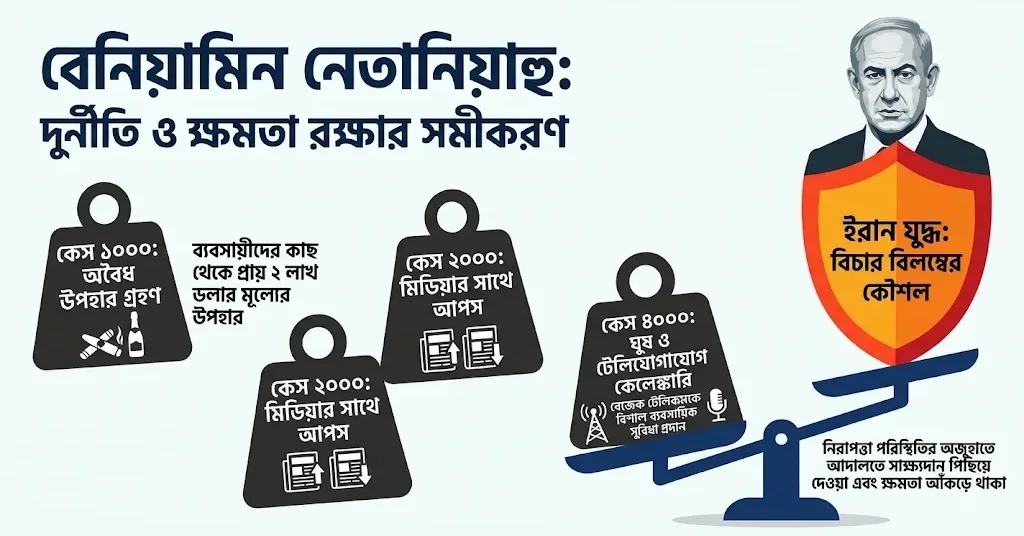
Netanyahu is facing three major corruption cases, commonly known in Israel as Case 1000, Case 2000 and Case 4000. Following a lengthy investigation that began in 2016, his trial officially started in 2020. The charges include bribery, fraud and breach of trust.
Case 1000: Allegations of Accepting Expensive Gifts
Case 1000 concerns allegations that Netanyahu and his wife, Sara Netanyahu, received expensive gifts from Hollywood film producer and Israeli billionaire Arnon Milchan and Australian billionaire James Packer.
The gifts reportedly included expensive cigars and pink champagne worth approximately 700,000 shekels. Prosecutors alleged that Netanyahu used his political influence to provide personal and business benefits to the wealthy individuals in return.
Case 2000: Alleged Secret Deal to Influence the Media
Case 2000 centres on an alleged secret arrangement between Netanyahu and Arnon Mozes, the publisher of the popular Israeli newspaper Yedioth Ahronoth.
According to the allegations, Netanyahu promised to take steps to reduce the circulation of the newspaper’s competitor, Israel Hayom. In exchange, Mozes was allegedly expected to provide Netanyahu with more favourable media coverage.
Case 4000: Bribery and Media Favouritism Allegations
Case 4000 is considered the most serious of the three corruption cases. Netanyahu is accused of providing significant business benefits to Shaul Elovitch, owner of Israeli telecommunications company Bezeq.
In return, Netanyahu allegedly received favourable coverage of himself and his family from Walla, a news website owned by Elovitch. The allegations relate to Netanyahu’s time as both prime minister and communications minister.
Attempts to Change the Judicial System
Netanyahu has also faced criticism over his government's efforts to reform Israel's judicial system while his corruption trials were ongoing.
The then attorney general, Avichai Mandelblit, reportedly advised Netanyahu to sign a conflict-of-interest agreement to prevent him from interfering in legal and judicial matters connected to his trial.
However, Netanyahu's government pursued controversial judicial reforms that aimed to reduce the Supreme Court's powers and increase government influence over judicial appointments.
Nationwide Protests Against Judicial Reforms
The proposed judicial reforms triggered widespread protests across Israel in 2023. Hundreds of thousands of people took to the streets, accusing the government of threatening the independence of the judiciary.
Tensions escalated further after Netanyahu announced plans to dismiss Defence Minister Yoav Gallant, who had expressed concerns about the proposed reforms. The decision sparked additional demonstrations across the country.
Gaza War and Allegations of Genocide
On October 7, 2023, Hamas launched an attack from Gaza into southern Israel, killing around 1,200 people and taking more than 250 others hostage.
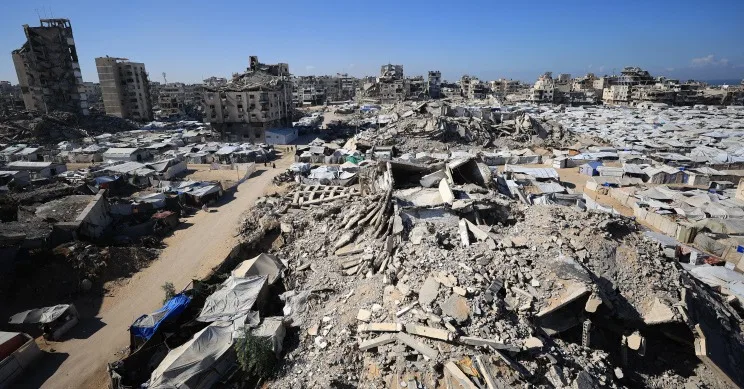
In response, Israel launched a large-scale military operation in Gaza. The offensive resulted in massive Palestinian casualties and widespread destruction. Netanyahu's government subsequently faced serious accusations of indiscriminate attacks and genocide.
Hostage Crisis and Questions Over Netanyahu's War Strategy
Many Israelis have criticised Netanyahu for allegedly failing to take sufficient measures to secure the release of hostages held by Hamas.
Critics argue that earlier action could have brought more hostages home alive and potentially ended the war sooner.
Political analysts have also suggested that the prolonged conflict became a means of protecting Netanyahu's political position. His legal team repeatedly cited the ongoing war as a reason for postponing court appearances.
Netanyahu Seeks Presidential Pardon
In an attempt to obtain relief from his corruption trials, Netanyahu formally requested a pardon from President Isaac Herzog.
He argued that the ongoing legal proceedings were dividing the country and that the wartime situation required his full attention to national security and diplomatic affairs.
However, political opponents criticised the request, arguing that Netanyahu should acknowledge responsibility before seeking a pardon. They accused him of putting personal political interests ahead of the country's interests.
Iran Becomes the Focus of a New Conflict
Following the Gaza war, Netanyahu's attention increasingly turned towards Iran, which he has described for decades as one of the greatest threats to Israel's existence.
Since the early 1990s, Netanyahu has repeatedly warned about Iran's nuclear programme. He has raised the issue in international forums, including the United Nations, arguing that Iran's nuclear ambitions pose a serious security threat.
Joint Military Operation Against Iran
On February 28, 2026, Israel and the United States launched a joint military operation against Iran. The move triggered another major escalation across the Middle East.
Following the outbreak of the conflict, Netanyahu's domestic approval reportedly increased to 62 per cent in some opinion polls. However, the prolonged war has raised serious concerns about regional security and its impact on the global economy.
What Happens If Netanyahu Loses Power?
If opposition parties succeed in forming a government, Netanyahu could lose his position as prime minister and face a weaker political position.
His ongoing corruption trials could then proceed without the same political influence he currently holds. If convicted, he could face legal penalties.
After nearly 19 years in power across three terms, Netanyahu's political future now appears increasingly uncertain amid mounting legal challenges, domestic opposition and regional conflicts.





Comments
No comments yet. Be the first to write one.
Leave a comment