

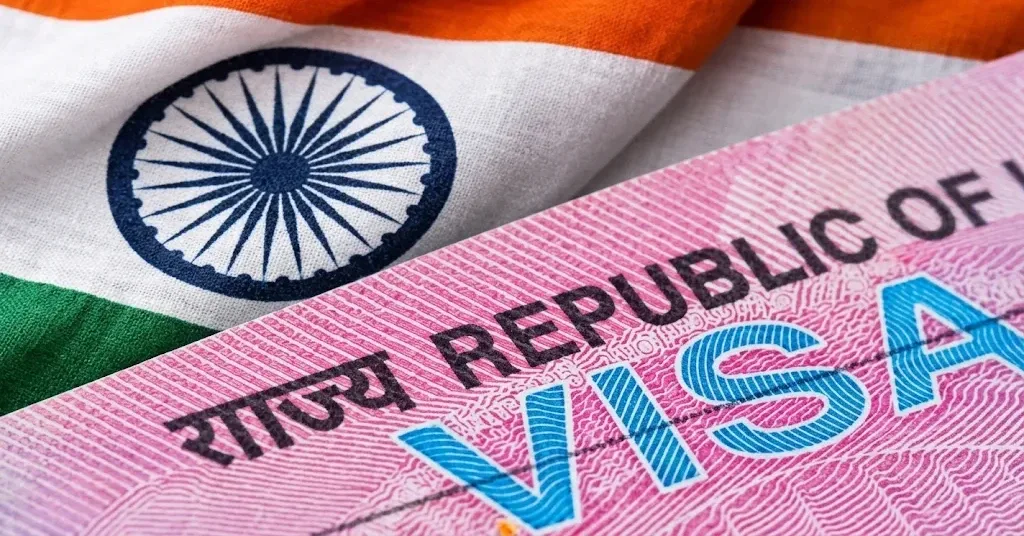
India has introduced major reforms to its visa system to make the application process easier and less complicated for foreign nationals. Under the revised framework, the number of main visa categories has been reduced from 13 to nine, while subcategories have been cut from 49 to 23. The government has also reduced the number of information fields in visa application forms by approximately 65 to 70 per cent.
The initiative aims to simplify travel arrangements for foreign nationals visiting India for tourism, medical treatment, education, research and business purposes. According to India's Ministry of Home Affairs, the visa structure has been reorganised in line with international standards to make the process more accessible and efficient.
This is the second major round of visa reforms after changes introduced in October 2025. The latest revision is intended to further reduce administrative complexities and provide a smoother experience for international visitors.
Tourist Visa Replaced with Visitor Visa
One of the major changes is the introduction of a Visitor Visa, replacing the previous Tourist Visa category. The new visa will cover not only general tourism but also short-term business discussions, medical consultations, wellness activities and training in languages, music and fine arts.
The Visitor Visa has been divided into two categories, V-1 and V-2. The V-1 visa will be valid for 30 days and allow multiple entries into India. Depending on eligibility, the V-2 visa may be issued for one, five or 10 years. Mountaineering activities have also been included under this category.
One-Year Visa for Medical Treatment
India has also revised its medical visa arrangements to make treatment easier for foreign patients. The M-1 visa will cover general medical treatment, while the M-3 visa will be issued to patients seeking treatment through traditional AYUSH systems.
Both categories will generally have a validity of one year with multiple-entry facilities. Similar benefits will also be available under the e-Visa system. Family members accompanying patients will be eligible for M-2 and M-4 visas, reducing the need for repeated applications.
Separate Visas for Students and Researchers
Under the revised framework, S-1 visas will be available for foreign students pursuing education from school to postgraduate levels. Meanwhile, S-2 visas will cover PhD researchers, visiting faculty members, interns and participants in scientific expeditions.
Foreign students admitted through the Study in India portal may apply for an e-S1 visa valid for up to five years, depending on the duration of their academic programme.
Changes to Business Visas
Business visas have been reorganised into two categories, B-1 and B-2. The B-1 visa will cover long-term business activities, including establishing companies and business ventures in India. The B-2 category will cover short-term and contract-based activities, conferences, sports events, cultural performances and film shoots.
A separate provision has also been introduced for foreign technical experts working with Indian companies. Eligible professionals may receive a Production Investment Business Visa under the B-2 category through the e-Visa platform.
E-Visa Facility for 172 Countries
Currently, citizens of 172 countries can access India's e-Visa facilities through Electronic Travel Authorisation across 13 subcategories. The government is preparing the necessary technological infrastructure to implement the revised system.
The nine main visa categories will include Business, Diplomatic, Employment, Journalist, Medical, Official, Student, Visitor and Miscellaneous visas. According to the Ministry of Home Affairs, the new visa framework is expected to become operational by December 2026.



Comments
No comments yet. Be the first to write one.
Leave a comment