


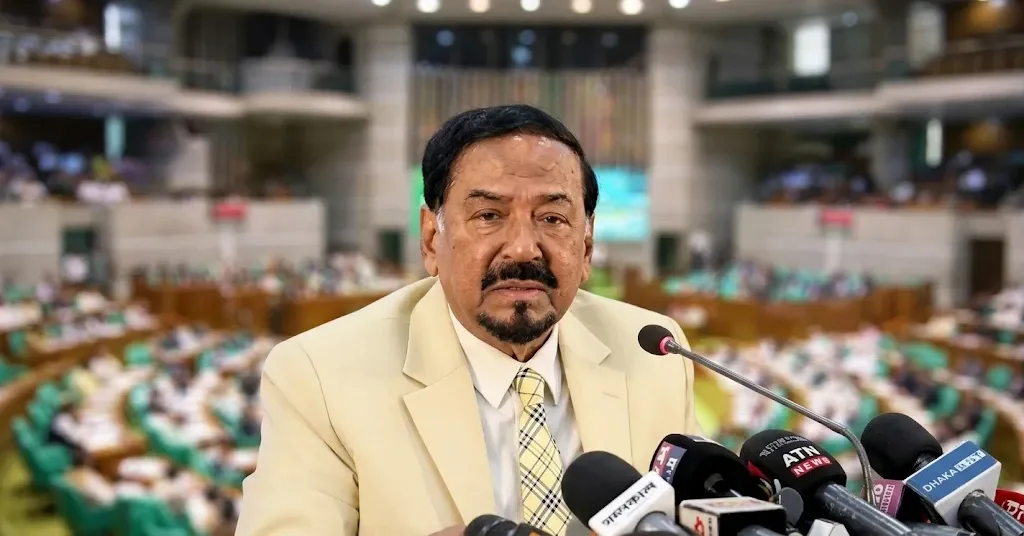
Speaker Hafiz Uddin Ahmed has said it is time to abolish the reserved seats system for women in Bangladesh’s parliament, arguing that the arrangement does not help women become truly self-reliant. Instead, he has proposed making it mandatory for political parties to nominate women candidates for at least one-third of the seats in national elections.
He made the remarks on Thursday (November 12) while speaking as the chief guest at a meeting of the All-Party Parliamentary Caucus for Disadvantaged Communities in the capital. Caucus President Barrister Mahbub Uddin Khokon and economist Dr Debapriya Bhattacharya were also present at the event.
Speaking about the history of reserved seats for women, the Speaker said 15 seats were set aside for women in the first parliament after independence because women had been underrepresented in politics. The original intention, he said, was to gradually phase out the arrangement as society progressed.
However, the number of reserved seats has increased over the years instead of being reduced. According to Hafiz Uddin Ahmed, successive parliaments have expanded the provision, bringing the number of reserved seats to 50.
He said the time had come to end the nomination-based reserved-seat system in the context of Bangladesh. Keeping the arrangement in place, he argued, could prevent women from standing on their own feet and becoming politically self-reliant.
The Speaker said many capable and experienced women leaders were now active in different parts of the country. They had the ability to contest general elections and defeat male candidates, he added.
Hafiz Uddin Ahmed also praised the quality of women representatives in the current parliament. Recalling an experience from a previous parliament, he said he had once seen a reserved-seat member struggle to read even a written statement, suggesting that she might not have been fully literate.
He said the situation in the current parliament was different, describing its women members as smart and competent. He noted that around seven or eight women, including six barristers, had entered parliament through direct elections.
According to the Speaker, these elected women lawmakers deliver impressive and well-reasoned speeches in parliament. Their performance has impressed him and reflects growing public awareness and social progress, he said.
He also pointed out that women had held the country’s top leadership positions for several decades. With greater opportunities, he believes, women can demonstrate their abilities through direct elections rather than relying on reserved seats.
As an alternative, the Speaker proposed introducing a law requiring every political party to nominate women candidates in at least one-third of the total constituencies. Such a measure, he said, would allow qualified women to compete directly and enter parliament as representatives chosen by voters.
The meeting also discussed the country’s broader political situation, corruption, the electoral system and the rights of disadvantaged communities. Hafiz Uddin Ahmed said the All-Party Parliamentary Caucus could play an important role in improving the lives of around 35 million poor and marginalised people.
He added that the caucus could help bring positive reforms both inside and outside parliament.

Comments
No comments yet. Be the first to write one.
Leave a comment