


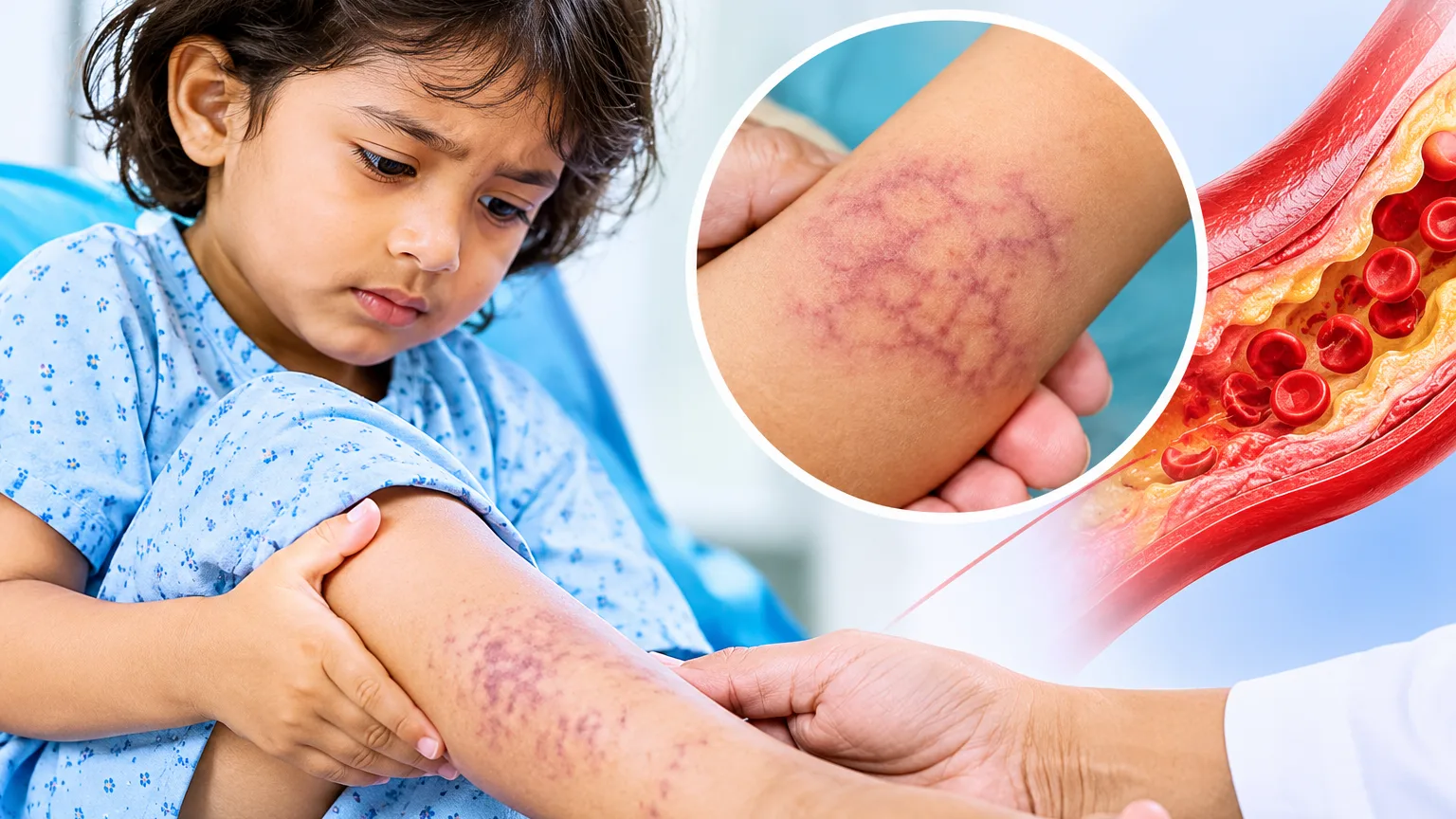
Persistent fever, unexplained skin rashes, muscle pain, and weakness in children may sometimes be associated with a rare inflammatory condition called Polyarteritis Nodosa (PAN). The disease affects medium-sized arteries and can interfere with blood flow to different organs. Although its exact cause is not fully understood, researchers believe that abnormal immune system activity and certain infections may play a role in triggering the condition.
Polyarteritis Nodosa is a rare form of vasculitis, a group of diseases that cause inflammation of blood vessels. In PAN, the walls of medium-sized arteries become inflamed and damaged. This can narrow or weaken the affected blood vessels, reducing the supply of oxygen and nutrients to different tissues.
The disease can affect several parts of the body, including the skin, kidneys, digestive system, muscles, joints, and peripheral nerves. Its severity varies depending on which blood vessels and organs are involved.
What Causes Polyarteritis Nodosa in Children?
The exact cause of childhood Polyarteritis Nodosa remains unknown in most cases. Medical researchers believe that the immune system mistakenly attacks the body's own blood vessels, leading to inflammation and tissue damage.
Most children who develop PAN were previously healthy. However, certain infections may act as triggers in some individuals. According to the Vasculitis Foundation, infections caused by Streptococcus bacteria have been associated with the development of PAN, particularly its skin-related form.
Hepatitis B and other viral infections have also been linked to some cases. However, this does not mean that every child with PAN has a viral infection. In many childhood cases, no specific triggering factor can be identified.
Can Genetic Factors Play a Role?
Genetic factors may also be important in certain childhood cases. One example is deficiency of adenosine deaminase 2 (DADA2), an inherited condition that can cause inflammation and damage to blood vessels resembling PAN.
DADA2 is associated with changes in the ADA2 gene and usually begins during childhood. However, it is important to understand that not every child diagnosed with PAN has this genetic condition. Genetic testing may be considered when doctors suspect an inherited blood vessel disorder.
What Symptoms Should Parents Watch For?
The symptoms depend on which blood vessels and organs are affected. Some common warning signs include:
Persistent fever and unexplained tiredness.
Purple or reddish skin rashes and painful skin lumps.
Muscle pain and joint pain.
Abdominal pain and unexplained weight loss.
High blood pressure or protein in the urine.
Numbness, weakness, or difficulty moving the feet.
In more serious cases, reduced blood circulation can damage tissues and organs. However, these symptoms alone cannot confirm PAN. A proper medical examination is necessary.
How Is the Disease Diagnosed?
There is no single blood test that can confirm Polyarteritis Nodosa. Doctors usually assess the child's medical history, physical symptoms, and laboratory results.
Blood tests may include a complete blood count, kidney function tests, inflammatory markers such as ESR and CRP, and hepatitis screening. Depending on the case, doctors may recommend a skin or other tissue biopsy and angiography to examine the affected blood vessels.
Can Polyarteritis Nodosa Be Treated?
Yes. Treatment aims to control inflammation, prevent further blood vessel damage, and protect affected organs. Doctors may prescribe corticosteroids and other medicines that suppress the immune system, depending on the severity of the disease.
Early diagnosis and appropriate treatment can improve the outcome for many children. Parents should seek medical attention if their child develops persistent unexplained fever, unusual skin changes or other concerning symptoms.






Comments
No comments yet. Be the first to write one.
Leave a comment