


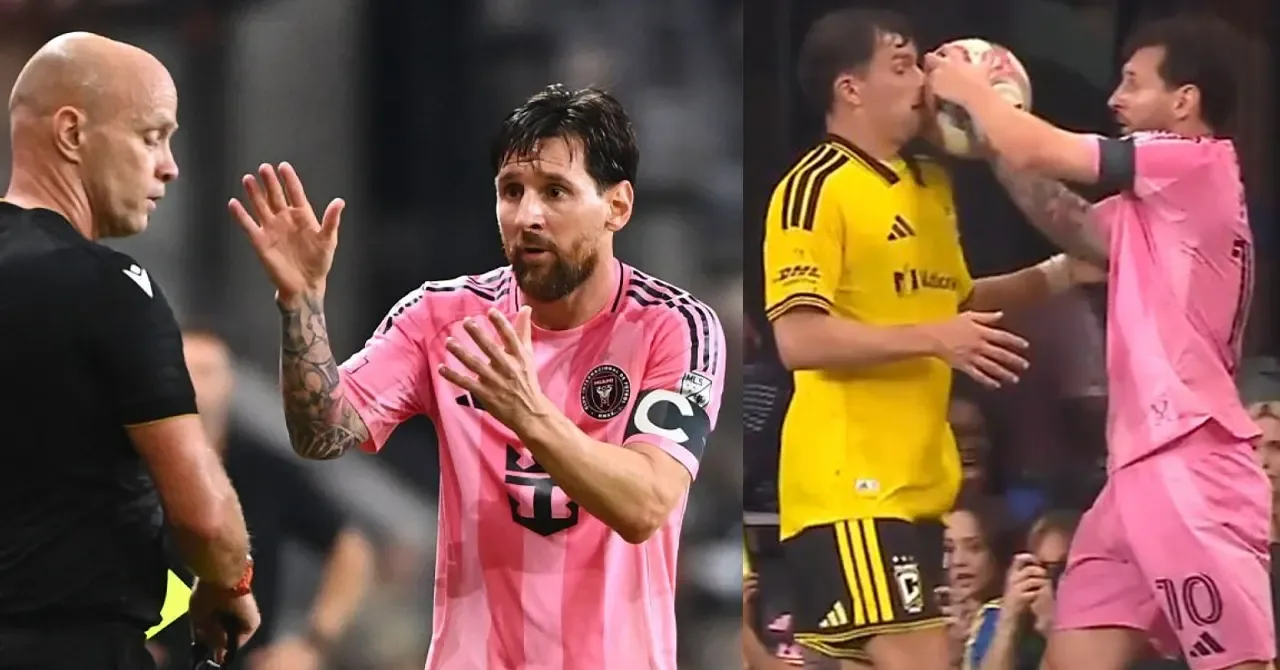
Lionel Messi's decision to throw the ball at an opponent's face during Inter Miami's 3-0 defeat to Columbus Crew has sparked widespread debate in football. Despite the incident, the Argentine superstar received only a yellow card, leaving many fans questioning why he was not sent off. Now, match referee Allen Chapman has explained the reasoning behind his decision.
The controversial moment took place just before half-time during the MLS Cup Playoffs Round of 16 encounter between Inter Miami and Columbus Crew. Messi was standing near the touchline, preparing to take a throw-in, when he was confronted by Columbus striker Gonzalo Tapia, who was attempting to prevent him from restarting play quickly.
The situation quickly escalated. Messi initially pushed the ball into Tapia's face before throwing it directly at the Chilean forward after becoming frustrated with the delay. The incident immediately attracted attention, with several observers believing the Argentine should have received a straight red card for his actions.
However, referee Allen Chapman decided against sending Messi off. Instead, he showed the eight-time Ballon d'Or winner a yellow card, allowing him to remain on the pitch. The decision surprised many supporters and became one of the most discussed moments of the match.
Following the game, Chapman provided an explanation for his decision. Speaking to the pool reporter, the match official said the amount of force used in the incident was minimal and that the action did not reach the threshold of violent conduct.
His explanation clarified why Messi avoided a straight red card despite throwing the ball at an opponent's face. Under the referee's assessment, the incident warranted a yellow card rather than a dismissal.
The decision, however, did not sit well with Columbus Crew head coach Laurent Courtois. Speaking after the match, he expressed his disappointment and argued that Messi deserved a more severe punishment.
"Everyone knows he deserved more than a yellow card. It is really disappointing," Courtois told The Guardian, making his position clear on the controversial decision.
Tapia, the player involved in the incident, appeared less interested in prolonging the controversy. Speaking to reporters, he described it as an ordinary moment in a football match and suggested that there was no reason to give it further attention.
He said the matter was over and nothing more had happened. According to Tapia, such incidents can occur in football, and similar situations could happen to any team under different circumstances.
Meanwhile, Inter Miami had little to celebrate from the match itself. Gonzalo Tapia opened the scoring for Columbus Crew from the penalty spot early in the game. Miami's problems increased when right-back Gonzalo Lujan was sent off after receiving a second yellow card, leaving the team with 10 players.
Columbus took full advantage of their numerical advantage and eventually secured a 3-0 victory.
After the defeat, Inter Miami coach Kili Gonzalez admitted that his team had failed to deliver the expected performance. He said the players had created opportunities for their opponents through their own mistakes.
Gonzalez also stressed the importance of learning from the defeat, adding that the team must improve ahead of its next match. He warned that another loss would result in elimination from the competition.





Comments
No comments yet. Be the first to write one.
Leave a comment