


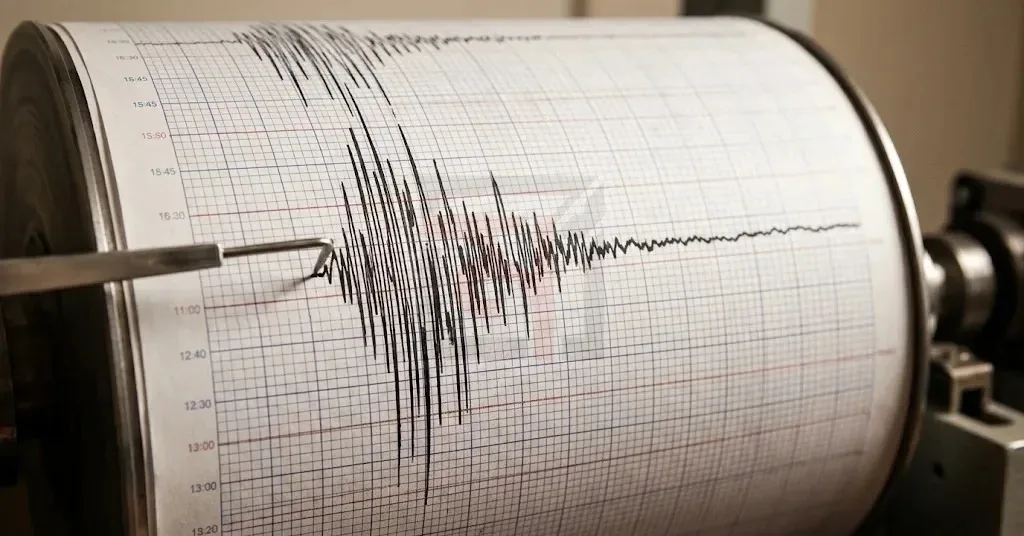
A powerful 6.8 magnitude earthquake struck the Banda Sea near Timor-Leste on Saturday (November 21), sending tremors across the region, including the country's capital, Dili, and Australia's northern city of Darwin. Although the earthquake was felt hundreds of miles away, no casualties or major damage have been reported so far.
According to a report by Fox News published on Saturday, the earthquake struck shortly after 6:30 am local time. Data from the United States Geological Survey (USGS) showed that the epicentre was located in the Banda Sea, approximately 65 miles northeast of Timor-Leste.
The earthquake originated at a depth of around 90 miles below the Earth's surface, according to USGS data. Despite its considerable depth, the tremors were felt across a wide area, affecting several locations in Timor-Leste, including its capital, Dili.
The impact of the earthquake extended beyond Timor-Leste, reaching neighbouring Australia. Tremors were also felt in Darwin, the capital of Australia's Northern Territory, located approximately 400 miles from the epicentre. The shaking caused concern among residents in the affected areas, although no significant damage or casualties had been reported at the time of the report.
An earthquake measuring 6.8 on the Richter scale is considered strong and can affect areas far beyond its epicentre. The extent of the damage caused by such an earthquake generally depends on several factors, including its depth, location and the geological conditions of the affected areas.
Timor-Leste is situated in one of the world's seismically active regions, near the Pacific Ring of Fire. The Ring of Fire is a geological belt stretching approximately 25,000 miles around the Pacific Ocean. It is home to numerous active volcanoes and is known for frequent earthquakes caused by the movement of tectonic plates beneath the Earth's surface.
The region is responsible for approximately 90 percent of the world's earthquakes, making countries across the Pacific region particularly vulnerable to seismic activity. Timor-Leste, Indonesia and Japan are among the countries that regularly face earthquake risks due to their geographical locations.
The latest earthquake has once again highlighted the geological risks facing countries in the region. Undersea earthquakes can sometimes affect coastal communities, depending on their magnitude, depth and location. However, no confirmed information about casualties, major structural damage or a tsunami following Saturday's earthquake was included in the initial report.
Authorities and residents in the affected areas remain concerned about the potential impact of seismic activity in the region.






Comments
No comments yet. Be the first to write one.
Leave a comment