


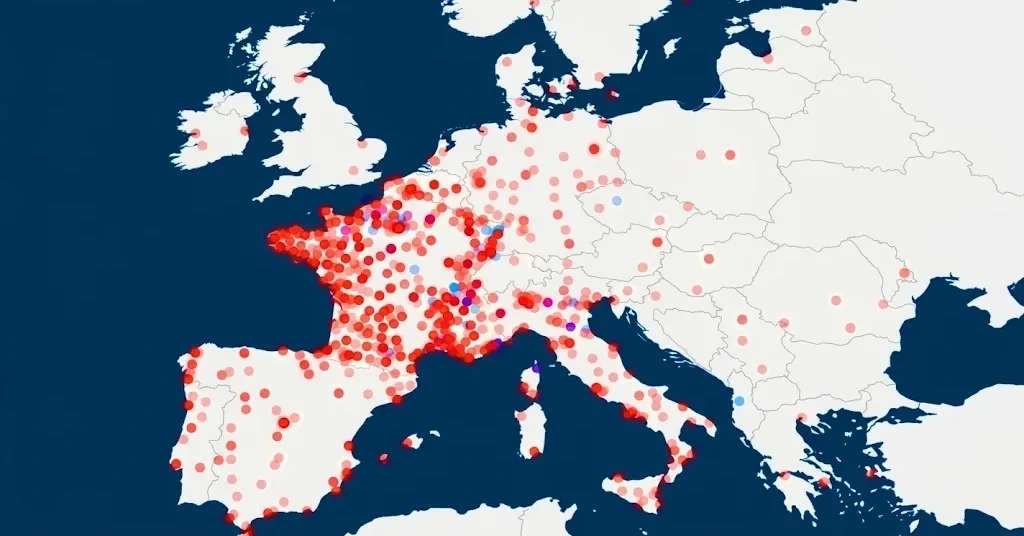
More than 1,700 protests and incidents of unrest have taken place across 31 European countries between September 15 and October 30, as people take to the streets over rising living costs, low wages, housing shortages and gaps in public services. The figures were highlighted by Al Jazeera after analysing data from the US-based Armed Conflict Location and Event Data (ACLED) project.
France has emerged as the main centre of the protests. The movement began around two months ago, when students demonstrated against deteriorating school buildings, teacher shortages and overcrowded classrooms. The demands later expanded to include concerns over the rising cost of living, high fuel prices, low wages and the need for social housing.
Workers’ unions and members of the Yellow Vests movement subsequently joined the demonstrations, turning the student-led protests into a wider campaign over economic and social conditions. According to ACLED data, France recorded more than 1,200 protests and riot-related incidents between September 15 and October 30.
On October 17 alone, more than 500,000 people reportedly took part in demonstrations across the country. Another 146,000 people attended rallies nationwide last Saturday, showing that public anger has continued despite weeks of protests.
After France, Spain recorded the second-highest number of protests, with 173 incidents. Italy followed with 160, while Germany and Portugal recorded 70 and 33 respectively. In Spain, demonstrations were held in response to the rejection of two emergency housing decrees. In Italy, protesters took to the streets over the rising cost of living and increasing rents.
The scale of the demonstrations points to a broad range of grievances rather than a single issue. While housing and wages have been central to protests in several countries, the demands differ from one place to another. In France, education-related complaints helped trigger the movement before economic concerns and calls for stronger social support brought more groups into the streets.
Tensions in France have also been heightened by a deadly attack in Trappes, north of Paris, on October 23. A 26-year-old Black man was killed and seven others were injured. The suspected attacker reportedly admitted targeting people of Muslim, African and North African backgrounds.
Human rights activists say immigrants and Muslim communities are increasingly being portrayed as criminals, helping normalise far-right rhetoric. They have also raised concerns about alleged excessive use of force by police while controlling demonstrations.
Meanwhile, several government figures have blamed the left-wing party France Unbowed for violence during the protests. However, according to information from the country’s intelligence services, the party was present at demonstrations but was not involved in the violence.
Analysts fear that political polarisation and the spread of far-right ideas could intensify as France approaches its 2027 presidential election. The protests reflect growing frustration over economic pressures and public services, while also exposing deeper divisions over identity, migration and the country's political direction.




Comments
No comments yet. Be the first to write one.
Leave a comment