


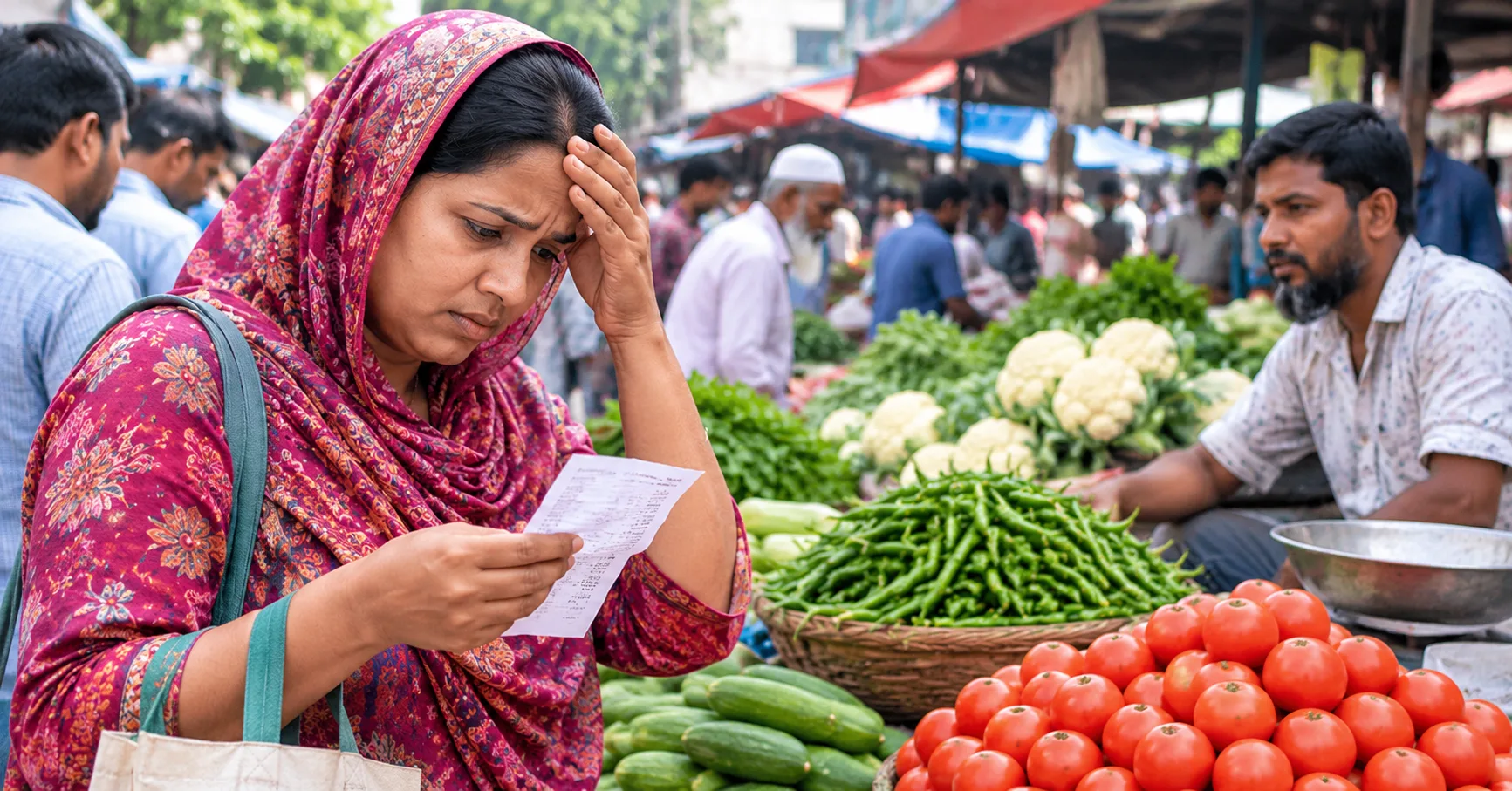
Bangladesh’s inflation eased slightly to 8.27 percent in October, but rising non-food prices and slower wage growth continued to put pressure on household budgets. Although food prices declined, higher costs of transportation, education and healthcare kept living expenses elevated, leaving low-income families, daily wage earners and people on fixed incomes struggling to manage their finances.
According to the latest data released by the Bangladesh Bureau of Statistics (BBS), point-to-point inflation fell to 8.27 percent in October from 8.34 percent in September. However, the rate remained higher than the 8.17 percent recorded in the same month last year.
Food inflation dropped significantly to 6.40 percent in October from 7.22 percent in September, reaching its lowest level in 54 months. The last time food inflation was lower was in April 2022, when it stood at 6.23 percent.
In contrast, non-food inflation climbed to 9.89 percent in October from 9.30 percent in September. This was the highest level in 41 months, reflecting continued increases in transportation, education, medical and other essential expenses.
Economists said favourable weather conditions and improved seasonal supplies of vegetables, potatoes and onions had helped reduce food prices. However, higher fuel costs, transportation fares and other operating expenses continued to drive up non-food inflation.
Zahid Hussain, former lead economist at the World Bank’s Dhaka office, said rising non-food prices had become the main driver of inflation. He noted that the fuel price adjustment made in September would continue to affect consumer prices over the next one or two months.
He also warned that changes in electricity tariffs, supply shortages and higher import costs could add further pressure to household expenses.
Meanwhile, wage growth slowed further in October, falling to 7.63 percent from 7.90 percent in September. The rate had remained above 8 percent for several months before declining.
According to Zahid, although inflation has eased slightly, workers are losing purchasing power because wages are not increasing at the same pace as living costs. The BBS wage index covers 63 low-skilled occupations, mainly involving daily labour.
Mohammad Lutfor Rahman, a professor of economics at Jahangirnagar University, said persistent inflation was forcing low-income households and daily wage earners to reduce spending, even on essential items.
He noted that many families were struggling to afford food, children's education and medical expenses. Some were even using their savings to meet everyday needs.
Md Deen Islam, research director at Dhaka-based research organisation RAPID, said weak investment demand and slower wage growth had kept overall economic demand subdued. However, he cautioned that the full impact of higher energy costs might not yet have been reflected in consumer prices.
He also credited favourable weather, improved agricultural production and government incentives for farmers for easing food inflation.
A relatively stable exchange rate and steady global commodity prices had also helped contain import-related inflationary pressure. During the period, the exchange rate remained around Tk 122 to Tk 123 per US dollar.
Economists, however, questioned whether the government's inflation target of 7.5 percent could be achieved. They warned that without controlling production, transportation and operating costs, reducing inflation would remain challenging.
Despite the slight decline in October, persistent non-food price increases and slower wage growth continue to make everyday life difficult for millions of people across Bangladesh.





Comments
No comments yet. Be the first to write one.
Leave a comment