


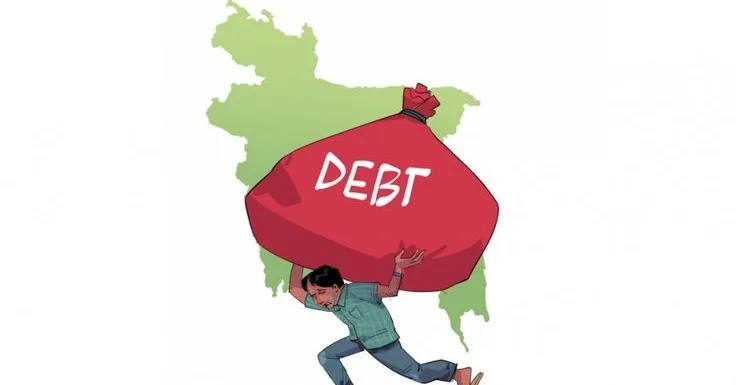
Bangladesh's external debt has climbed to $113.44 billion, raising concerns over the country's ability to manage future repayments while maintaining economic stability and development spending.
According to the World Bank's International Debt Report 2026, the country's external debt reached $113.44 billion at the end of 2025, an increase of 8.6 percent from the previous year. The figure is nearly three times the $38.77 billion recorded in 2015.
The data translates into approximately $646 in external debt per person in Bangladesh, exceeding South Asia's average of around $564.
However, economists caution that per capita debt alone does not provide a complete picture of a country's financial condition. Factors such as national income, export earnings, foreign exchange reserves, interest rates and repayment capacity must also be considered.
In an opinion article, Dr Fahmida Khatun, an economist and distinguished fellow at the Centre for Policy Dialogue (CPD), highlighted the growing importance of developing a sustainable debt management strategy.
She noted that Bangladesh's external debt represented 23.6 percent of gross national income in 2025 and 210.5 percent of exports. Debt servicing also accounted for 15.7 percent of export earnings, highlighting the growing pressure on foreign currency resources.
The situation is particularly important as Bangladesh prepares to graduate from the Least Developed Country (LDC) category.
Rising Debt Raises Economic Concerns
Bangladesh's borrowing has increased partly because of infrastructure development projects and financing requirements for budget deficits.
While loans for ports, railways, power infrastructure and flood protection can support long-term economic growth, poorly planned projects can create serious financial challenges.
Project delays, rising construction costs and lower-than-expected economic returns can leave the country with substantial repayment obligations without delivering the anticipated benefits.
Currency depreciation creates another challenge. When the taka loses value against the US dollar, repaying foreign loans becomes more expensive in local currency, even if the original debt amount remains unchanged.
The article also highlights the importance of examining the composition of external debt.
World Bank data shows that multilateral creditors accounted for approximately 39.8 percent of Bangladesh's external debt stock in 2025, while concessional borrowing represented around 32.8 percent.
As Bangladesh approaches LDC graduation, access to some preferential financing arrangements may become less favourable, making careful borrowing decisions increasingly important.
Five Steps Towards Sustainable Debt Management
Dr Fahmida Khatun outlined several measures that could help Bangladesh manage its growing debt burden.
1. Strengthening Revenue Collection
The government needs a reliable medium-term revenue strategy by expanding the tax base, improving compliance, reducing unnecessary exemptions and introducing more effective digital tax administration.
2. Improving Public Debt Transparency
A regularly updated debt management strategy should disclose borrowing details, including currencies, interest rates, repayment schedules and creditors. Government guarantees and potential liabilities from state-owned enterprises and public-private partnerships should also be monitored.
3. Ensuring Effective Public Investment
Large infrastructure projects should undergo independent cost-benefit assessments before approval. Projects should be prioritised based on their potential to generate economic returns, create employment and improve productivity.
4. Expanding Export Earnings
Bangladesh needs to diversify its export base and strengthen its ability to compete in international markets ahead of LDC graduation.
The country's trade arrangements with Japan and South Korea could create new opportunities, but businesses must also meet international standards, improve product quality and comply with rules of origin.
5. Aligning Debt Policy with Economic Reforms
Financial sector stability, reliable energy supplies, stronger business conditions and improved competition are essential for increasing investment returns.
A more productive economy can generate higher tax revenues and foreign exchange earnings, making future debt repayments more manageable.
Borrowing Must Deliver Long-Term Economic Benefits
The article argues that Bangladesh cannot completely avoid borrowing, particularly when financing development and infrastructure requirements.
However, every new loan should contribute to productive assets, stronger revenue generation or greater foreign exchange earning capacity.
The central challenge is not simply how much the country borrows, but whether borrowed funds generate sufficient economic returns to support repayment without putting essential public spending under pressure.
A sustainable debt management policy is therefore becoming increasingly important for Bangladesh's long-term economic stability.




Comments
No comments yet. Be the first to write one.
Leave a comment