
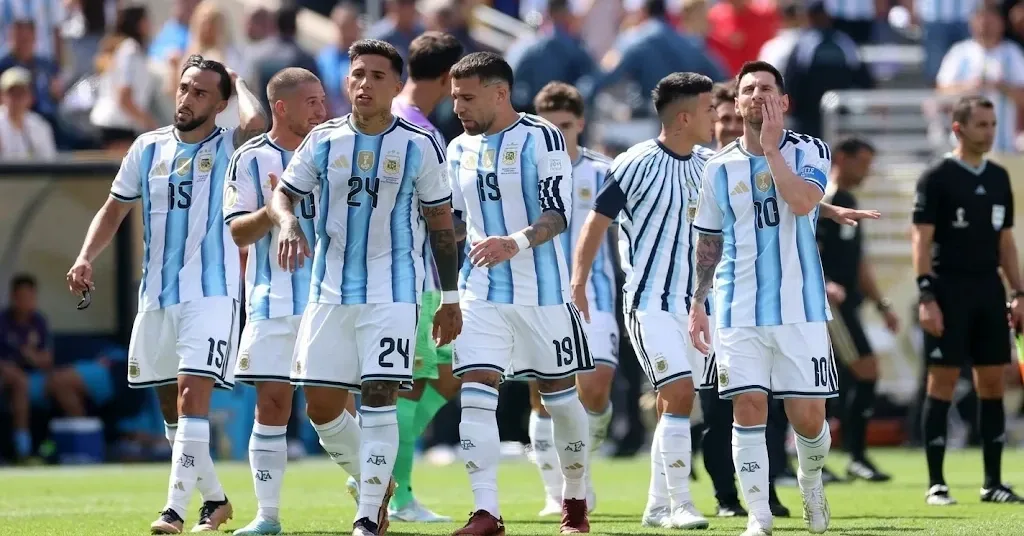
Argentina have already secured their place at the 2030 FIFA World Cup as one of the co-hosting nations. However, despite having a guaranteed spot in the tournament, Lionel Messi's country will still participate in the CONMEBOL qualifying campaign alongside Uruguay and Paraguay. The decision may seem unusual, but there is a specific reason behind it.
Although the 2030 World Cup is still several years away, qualifying competitions across all six FIFA confederations are scheduled to begin next year. These include CONMEBOL, UEFA, CONCACAF, AFC, CAF and OFC. However, South America's qualifying campaign will feature an unusual arrangement, with three already-qualified teams competing alongside the other nations.
Argentina, Uruguay and Paraguay have secured their places in the 2030 tournament because they will jointly host its opening celebrations and group-stage matches. Nevertheless, all three countries will remain part of the South American qualifying competition and play the same number of matches as the other participating nations.
The change is linked to the expansion of the FIFA World Cup from 32 to 48 teams, which was introduced for the 2026 edition. Following the expansion, CONMEBOL's allocation increased from 4.5 to 6.5 places, giving South America more opportunities to qualify for the tournament.
However, with Argentina, Uruguay and Paraguay already guaranteed places as hosts, three of those qualifying spots have effectively been reserved before the campaign begins. Despite this, CONMEBOL has decided not to remove the three host nations from the qualifying schedule.
Traditionally, countries hosting the FIFA World Cup receive automatic qualification and do not need to participate in the qualifying campaign. Instead, they usually fill their international calendars with friendly matches during the qualifying period.
This time, however, CONMEBOL has chosen a different approach. Argentina, Uruguay and Paraguay will compete in the qualifiers just like the other seven South American nations. They will earn points, feature in the standings and follow the regular competition schedule.
There is one important difference. Their positions in the final standings will not affect their already guaranteed World Cup qualification. If any of the three host nations finish in a direct qualification position, that place will effectively become available to another team.
For example, if Argentina finish third in the CONMEBOL standings, they will not occupy one of the available qualification spots because their World Cup place is already secured as a host nation. As a result, the team that would normally finish fifth and enter the intercontinental play-offs could instead qualify directly for the tournament. Meanwhile, the team finishing sixth would receive the play-off opportunity.
The main reason behind this arrangement is to maintain the existing qualifying format. By keeping all 10 South American nations in the competition, CONMEBOL can preserve the 18-match schedule rather than reducing the number of games for the remaining teams.
Under this system, Argentina, Uruguay and Paraguay will continue competing throughout the qualifying campaign, even though their places at the 2030 FIFA World Cup are already guaranteed.






Comments
No comments yet. Be the first to write one.
Leave a comment