


Coffee is one of the world's most popular beverages. Millions of people enjoy a cup every morning, but not all coffee comes with an ordinary price tag. Some varieties cost significantly more because of their distinctive flavour, production methods, rarity and geographical origin.
While a regular cup of coffee may cost a few hundred or a few thousand taka, certain rare varieties can command remarkably high prices. Surprisingly, some of these luxury coffees are made from beans that pass through the digestive systems of animals.
Although the process may sound unusual, these coffees have attracted considerable attention among coffee enthusiasts. The beans are collected from animal droppings, carefully cleaned, dried and roasted before being prepared as a beverage.
However, animal-processed coffee is not automatically the world's most expensive coffee. Rare varieties, international competitions and auction records can also push the prices of other coffees to extraordinary levels.
Black Ivory Coffee: A Rare Brew Processed Through Elephants
A luxury coffee produced through a unique process in Thailand
One of the most talked-about animal-processed coffees is Black Ivory Coffee, produced in Thailand. It is known for its unusual production method and high price.
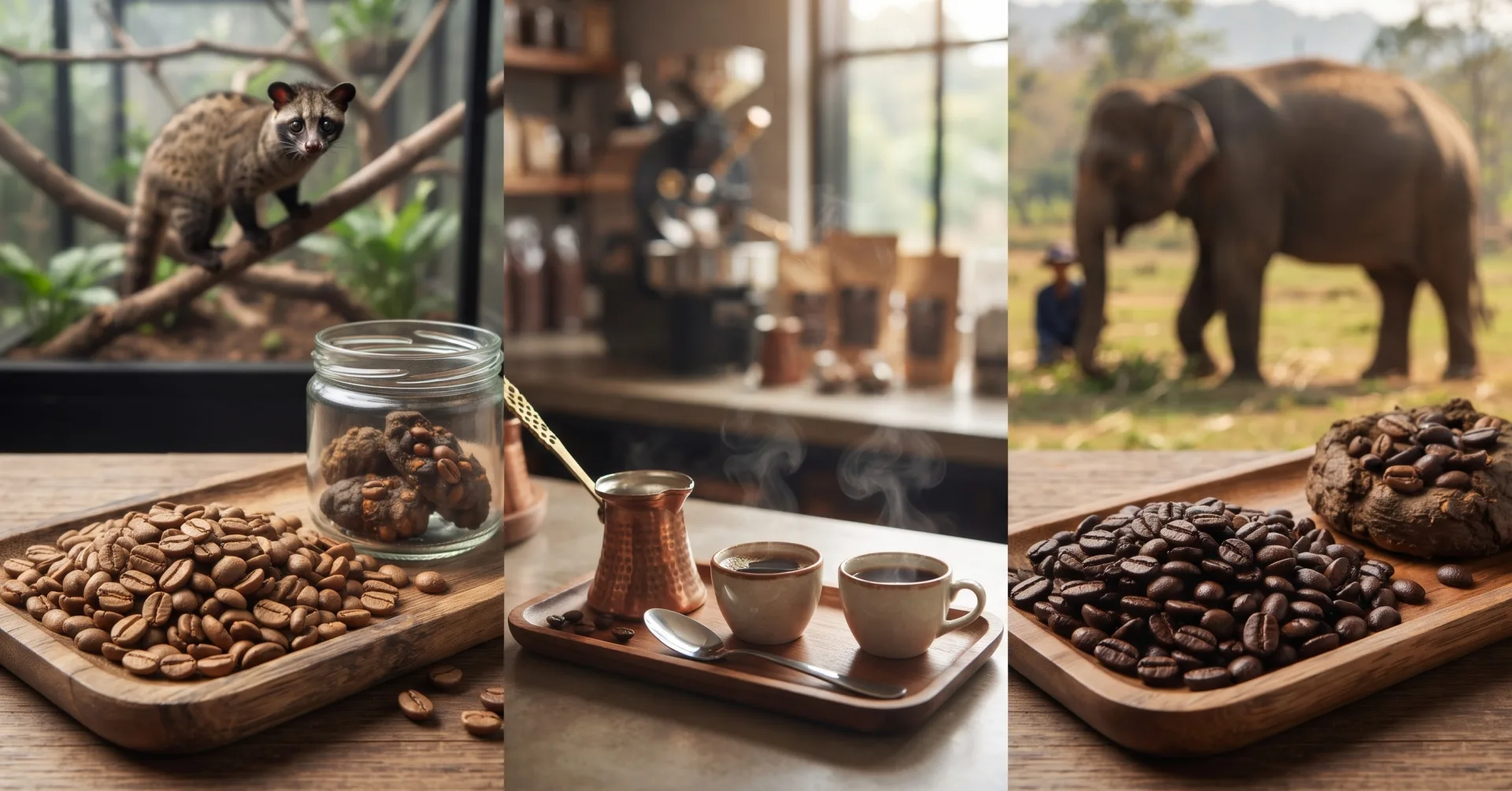
The process involves feeding ripe coffee cherries to elephants. As the cherries pass through the elephants' digestive systems, natural digestion and fermentation affect the beans. The beans are later recovered from the dung, washed, dried and sorted before being roasted.
According to the producer, the digestive process can reduce bitterness and contribute to a distinctive flavour profile. The company describes notes of chocolate, dark berries, tamarind and spices.
Producing Black Ivory Coffee is difficult because only a small portion of the cherries consumed by elephants results in usable beans. The producer says its annual harvest is limited to around 500 pounds, contributing to the coffee's rarity.
How much does Black Ivory Coffee cost?
The company's website says this pack makes approximately two 8-ounce cups, putting the listed cost at about $85 per cup before any additional local charges. Prices may change.
Kopi Luwak: Coffee Made from Civet Droppings
Kopi Luwak is another widely known luxury coffee. Despite the word "cat" sometimes used in its English descriptions, it is not made from the droppings of domestic cats. The beans come from coffee cherries eaten and passed by civets, small mammals found in parts of Asia.
Civets consume ripe coffee cherries, while the beans inside are only partially digested. The beans are then collected from the animals' droppings, cleaned, dried and roasted.
Coffee enthusiasts have described Kopi Luwak as relatively smooth and less bitter than some conventional coffees. Researchers and industry observers, however, have questioned whether its distinctive processing always justifies the high price.
The price varies widely depending on the source, quality and seller. Some retail products have been reported at around $45 per pound, while wild-collected beans can reach several hundred dollars per pound. Imported servings at luxury establishments may cost considerably more.
Animal welfare concerns surrounding Kopi Luwak
The popularity of Kopi Luwak has raised serious concerns about animal welfare. Investigations and research have found civets kept in small cages and forced to consume coffee cherries for commercial production.
Animal welfare organisations have called for greater transparency and for consumers to choose only verified, responsibly sourced products.
Finca El Injerto: Award-Winning Coffee from Guatemala
Finca El Injerto is a well-known coffee estate in Guatemala. Its reputation comes from carefully produced coffee, rare varieties and success in international specialty coffee competitions and auctions.
In 2012, a small lot of one of the estate's prized Arabica varieties reportedly sold for around $500.50 per pound at auction. The lot contained only eight pounds, demonstrating how rare, high-quality coffee can attract extraordinary prices.
The value of such coffee depends on its quality, limited production, reputation and demand among specialty coffee buyers.
Saint Helena Coffee: A Rare Brew from a Remote Island
Saint Helena is a remote island in the South Atlantic Ocean. Coffee grown there has gained recognition among specialty coffee enthusiasts for its distinctive origin and limited supply.
The island's isolated location, particular growing conditions and relatively small production contribute to its appeal. Its coffee is often sold at a premium compared with more widely available varieties, although prices differ by seller and product.
Molokai Coffee: A Specialty from Hawaii
Molokai Coffee takes its name from the Hawaiian island where it is grown. The island's volcanic soils and local climate support coffee cultivation.
Its regional identity, production scale and flavour profile make it a distinctive specialty coffee. However, it is important to distinguish premium regional coffees from record-breaking auction lots, which may command much higher prices.
Why Are Some Coffees So Expensive?
Several factors can contribute to the high prices of specialty and luxury coffees.
1. Complex production methods
Animal-processed coffees such as Black Ivory and Kopi Luwak require additional collection, cleaning and processing steps.
2. Limited supply
Some varieties produce only small quantities of beans. In animal-processed coffee, not every cherry results in a usable bean.
3. Rarity and demand
Coffee grown in remote locations or from rare varieties may have limited availability and strong demand among collectors and enthusiasts.
4. International auctions
Exceptional coffee lots can attract high bids at international auctions. These prices may reflect a particular small batch rather than the cost of ordinary retail coffee.
5. Luxury appeal
Some consumers pay extra for the unusual production story, rare origin or exclusive experience associated with a coffee.
Beyond the Price: Taste, Quality and Animal Welfare
Expensive coffee is not necessarily better for every drinker. Taste is subjective, and a high price does not automatically guarantee superior quality or health benefits.
The production of civet coffee, in particular, has raised ethical questions. Consumers should consider whether the beans were sourced from free-ranging animals or from captive civets kept in poor conditions.
Producers of Black Ivory Coffee say they prioritise elephant care and responsible production. Nevertheless, consumers should examine the sourcing and animal-welfare practices behind any animal-processed coffee before purchasing it.
From Unusual Beans to Luxury Beverages
Coffee beans that once might have been discarded with animal waste have become part of an unusual luxury market through careful collection and processing.
For some coffee lovers, these varieties offer a rare taste experience. For others, their appeal lies in the unusual production process and the story behind each cup.
Ultimately, the high prices of these coffees reflect more than flavour alone. Rarity, limited supply, production methods, reputation and consumer curiosity all contribute to their value.






Comments
No comments yet. Be the first to write one.
Leave a comment